Town of Millertown

Sign our guestbook

About

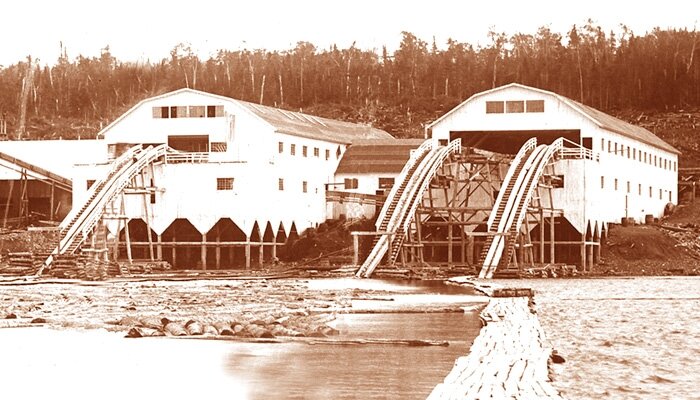
In the 1880's England depended mostly on Sweden for it's lumber and timber needs. Lewis Miller, a timber baron and lumber merchant from Creif, Scotland; established sawmills in Sweden through special arrangement with the King and Government. Later with the exhaustion of timber on his limits at the end of the 1880's, coupled with other factors; the operation was no longer viable. Having heard of Newfoundland's vast timber resources through a friend, (R.G. Reid, a railroad engineer and builder); Miller decided to send his trusted woods manager McCrombie to determine the potential for development in this country.

Alexander 'Mack' McCrombie arrived in Newfoundland in the late fall of 1899. His objective was to cruise the Red Indian Lake area in search of pine timber to supply the proposed sawmill operation. Mack snow-shoed to the lake from the private Reid rail car at Joe Glodes pond (later Millertown Junction). Eventually, Mack returned to St. John's and forwarded his positive report to Miller in Scotland.

Lewis Miller arrived in St. John's in August 1900 after closing his operation in Sweden. He brought several Scots and over one hundred Swede lumbermen, mill workers, families and their household effects. Miller also brought equipment for two mills and winch boats-alligator sidewheelers. A mill and winch-boat were destined for Glenwood.

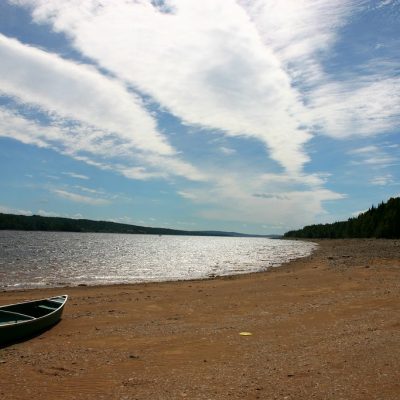
To accommodate the workers and families at Millertown a number of homes had to be built therefore a suitable townsite had to be planned. The ultimate site was unforgettably beautiful with the stand of pine laid out on a spit of land extending from the south-east shore of the lake. It was almost to the opposite shore where the Mary March river flowed in to the lake. The point of the spit of land is commonly referred to as a Beothuk encampment site in proximity to where Mary March was captured and eventually returned for burial following her death in Ship Cove (Botwood).

The new town was planned and laid out with three streets, all running at right angles to the main road and parallel to the lake shore. Eighty Swedish style two-room cottages were built along the streets, each with a frontage of 100 feet. This feature was mainly for fire protection.

In addition to eighty cottages there were several larger two-story houses and others of the staff-house type for large families, supervisors and bosses. On completion of the homes Miller decided to construct a Church/School. The Church built on the hill overlooking the town and lake stands today as a continuing place of Worship.

Lewis Miller divested his holdings to Harry Crowe of Timber Estates in 1903. In 1905 Crowe sold to the newspaper Barons, the Harmsworth brothers of London England, who planned a paper mill at Grand Falls. The new Anglo Newfoundland Development Company brought prosperity to the region.

The original town site was moved to higher land prior to the construction of the Exploits dam near Millertown resulting in the lake's higher water level in 1926-27. Some of the early houses, the railbed, and remnants of the sawmill steam plant (ironwheel) exist today.

In 2000 when the town founded by Miller celebrated it's centennial a descendant of Miller, Audrey Johnson MacDonald; (grandniece) visited from Ontario and participated in the celebration. Later, John and Peter McCurdy (great-grandsons from Nova Scotia) and more recently, Winifred Kelly (granddaughter from Creif, Scotland); visited Millertown to connect with their Heritage.